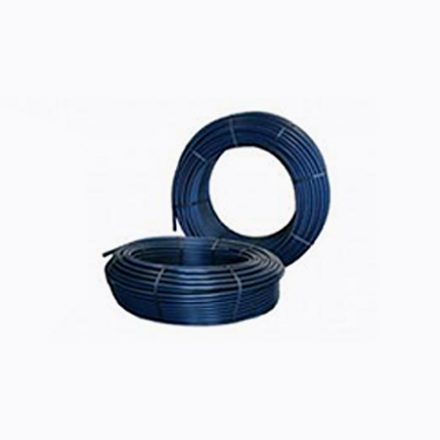
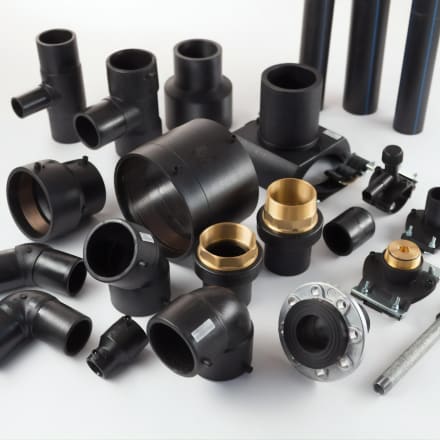
Corrugated Drainage Pipe & Fittings
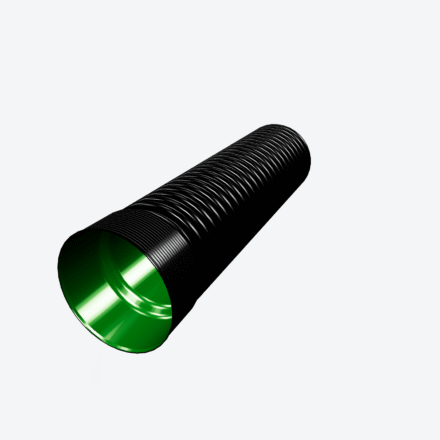
The Clover corrugated structured wall polyethylene pipe system is designed for drainage applications.
Lighter to handle and quicker to lay than rigid pipe.
The lightweight HDPE construction supports safer manual handling, less time on site and lighter plant requirements. These benefits are built into how corrugated pipe works under AS/NZS 2566.1, the Australian standard for structural design of buried flexible pipelines. Flexible pipe works differently to rigid alternatives: the pipe deflects slightly under load, mobilising passive resistance in the surrounding sand and compacted backfill, so there’s less need for the heavy reinforcement and plant that other pipe types demand.
That difference is what makes corrugated pipe suited to sites where ground conditions vary. It tolerates soil movement and deformation without structural damage, and is resistant to aggressive soil chemistry, moisture and other site contaminants that degrade less resilient materials. So it saves time on site without giving up service life underground.

Corrugated HDPE pipe combines a smooth bore for hydraulic efficiency with a structured outer wall for ring stiffness, making it suited to non-pressurised gravity drainage across civil, agricultural, culvert and mining projects.
Typical applications for corrugated HDPE pipe systems include:
For new developments and infrastructure upgrades alike, our corrugated HDPE pipe range supports resilient, low-maintenance drainage networks.

Corrugated pipe gives project teams the flexibility to work around site conditions, not against them.
Clover corrugated pipe is 100% recyclable, with a lower carbon footprint than reinforced concrete pipe.
Independent life cycle assessments using third-party verified Environmental Product Declarations (EPDs) show that corrugated PE and PP drainage pipe emit 12 to 32% less CO₂ than steel-reinforced concrete pipe across common stormwater sizes, and use significantly less freshwater during manufacturing. For councils, developers and contractors working to meet evolving environmental regulations, that’s a difference worth factoring into material selection.

For stormwater and drainage projects, reinforced concrete pipe (RCP) has long been the default. Corrugated HDPE pipe is an increasingly specified alternative: it’s lighter, faster to install and has a comparable design life, without the steel reinforcement and heavy plant that concrete pipe demands on site.
The two products aren’t interchangeable specification-for-specification, and there are still applications where concrete is the right call. For many gravity drainage projects, however, a correctly specified corrugated HDPE pipe system can meet the same hydraulic and structural requirements with less installation effort.

Clover’s corrugated pipe fittings (bends, tees, junctions, end caps, couplings, plugs, reducers, saddles and adaptors) use the same spigot and socket jointing system as the pipe itself and are manufactured to AS/NZS 5065. As a complete system, every fitting connects the same way, whatever the configuration on site.
Corrugated HDPE pipe is engineered for a long service life, typically measured in decades, when installed in accordance with AS/NZS 2566.2. Its resistance to corrosion, abrasion and aggressive ground conditions means it performs reliably underground.
Yes. Corrugated pipe is designed for burial and is a common choice for underground stormwater and drainage systems. As a flexible pipe, it develops its load-carrying capacity through interaction with the surrounding soil, so bedding, haunch support and compaction should follow AS/NZS 2566.2.
Corrugated pipe can be installed under trafficked areas, including roads and driveways as part of a culvert, provided pipe stiffness (SN), cover depth and backfill are specified for the design loads in accordance with AS/NZS 2566.1 and the relevant road authority requirements.
Get in touch with our team for additional information on product pricing, technical data, project support and more.
Get in touch with our team so we can support the planning, source, and supply of your next project.
We endeavour to reply within 1 business day.
Thanks for getting in touch, we will respond as quickly as possible.
If you have an urgent matter, please call your nearest Clover branch.